Screen-free relaxation menu
Build a kit of easy, screen-free calming activities and place them wherever you'd reach for your phone, so the evening default becomes relaxing instead of doomscrolling.
This page isn't typically flagged for the selected profile — shown because you opened it directly.
Relaxing with screens is less restorative than relaxing without them — especially when guilt about the phone, which itself raises arousal, comes along. Instead of fighting the habit with willpower, change the environment: place relaxation tools everywhere you’d otherwise reach for your phone (couch, floor, kitchen, outside) so screen-free relaxing is just as convenient and low-friction.
Pick a few items from the menu: a hands-busy hobby (cross-stitch, knitting) keeps the hands occupied while the brain disengages; sensory play (a bin of dried beans, kinetic sand, water) is oddly calming; going outside for green time gives attention a break because nature draws it effortlessly. When energy is very low, lie down and stare at the ceiling but find a gentle focal point (light and shadow) so you do nothing yet still occupy your attention and don’t start a new task.
Don’t use all the tools at once — pick one or two to start, because too many options is a fast route to decision paralysis in ADHD.
Helps with
Resources & links
1 source-
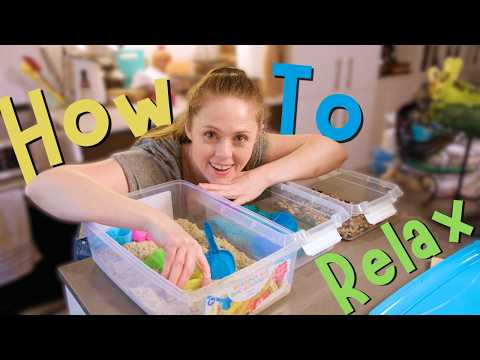 Tired of Doomscrolling? Here Are Some Alternatives!
- 0:09 Relaxing with screens is less restful
- 0:25 Place relaxation tools where you'd reach for your phone
- 2:06 A hands-busy hobby quiets the brain
- 3:25 Sensory play is oddly calming
- 7:29 A focal point to 'do nothing, but not nothing'
- 8:53 Green time gives attention an effortless break
- 10:18 Pick one or two tools, not all at once
What the research says
Scientific grade verified against the literature. No entries = no direct studies (graded from mechanism/experience).
- Smartphone screen time reduction improves mental health: a randomized controlled trialRCT · 2025
- A Nudge-Based Intervention to Reduce Problematic Smartphone Use: Randomised Controlled TrialRCT · 2022
- Altering micro-environments to change population health behaviour: towards an evidence base for choice architecture interventionsreview · 2013
- The acute psychological effects of screen time and the restorative potential of nature immersion amongst adolescents: A randomised pre-post pilot studyRCT · 2023
- Psychological impacts of screen time and green time for children and adolescents: A systematic scoping reviewreview · 2020
- Associations of Passive and Active Screen Time With Psychosomatic Complaints of Adolescentscohort study · 2022