When meds 'stop working', look past the dose
'My stimulant stopped working' rarely means 'I need more'. ADHD spans six functional domains, and sleep, breathing, iron, hormones, mood, arousal and life stress can each degrade them. Before escalating the dose, describe the specific change so the real cause — often sleep — gets targeted.
This page isn't typically flagged for the selected profile — shown because you opened it directly.
Stimulants help in the short term, but long-term naturalistic studies show up to half of people stop taking them, mainly because of side effects — so initial benefit doesn’t guarantee a lifelong fit, and adherence and side effects deserve tracking over the long haul. ADHD itself spans several functional domains (cognition/executive function, motivation, reward learning, impulse control, behavioural activation, and the stress/fight-or-flight response), which means treatment has to reach beyond focus alone — emotional arousal and sleep are part of the picture, not afterthoughts.
So when a stimulant seems to fail, the useful first step is not a reflexive dose increase but asking what ‘stopped working’ actually means — racing thoughts, worse sleep, anxiety, rigidity each point to a different cause, and raising the dose can make some of them worse. A structured check helps: rule out organic factors (iron-deficiency anaemia, obstructive sleep apnea, hormones), then co-prescribed substances, then over-arousal/mixed states, then mood and trauma — before blaming the dose. Sleep is especially high-yield: ADHD is highly comorbid with sleep disorders (some research up to 80%), and treating the underlying problem — apnea with CPAP, or enlarged tonsils/adenoids in children — improves the very domains ADHD affects and can let the medication work at a lower dose. Where hyperarousal, nightmares or vivid dreams dominate, non-stimulant alpha-2 agonists (guanfacine, clonidine) may fit better or augment. This is information to take to a prescriber, not a self-medication plan.
Helps with
Resources & links
2 sources-
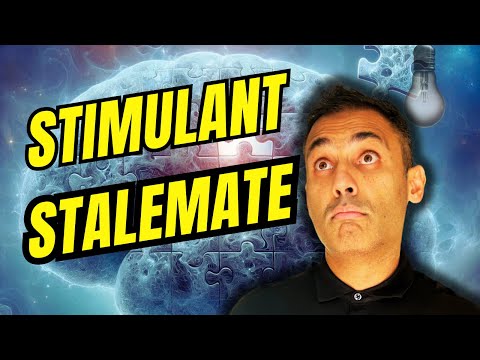 ADHD Isn't Just About Stimulants—Here's What You're Missing in Treatment
- 1:28 Half may stop stimulants long-term, mainly due to side effects
- 2:08 ADHD spans six functional domains, not just focus
- 4:03 ADHD is highly comorbid with sleep disorders (up to ~80%)
- 4:53 In children, enlarged tonsils/adenoids can blunt the medication
- 5:33 Ask what 'stopped working' actually means before changing dose
- 7:23 Use a diagnostic hierarchy (organic → substances → arousal → mood → trauma)
- 9:42 Treating apnea (CPAP) can lower the needed stimulant dose
- 10:00 For hyperarousal/nightmares consider alpha-2 agonists
- 11:43 Stress acts as a hidden dose increase
-
What the research says
Scientific grade verified against the literature. No entries = no direct studies (graded from mechanism/experience).
- Tolerance to the therapeutic effects of ADHD medications: a systematic review (Cortese/adhdevidence synthesis of 17 studies, >10,000 individuals)review · 2024
- Pharmacological interventions for ADHD: a systematic review and dose–effect network meta-analysismeta-analysis · 2026
- Impact of a behavioural sleep intervention on symptoms and sleep in children with ADHD, and parental mental health: randomised controlled trial (Hiscock et al., BMJ)RCT · 2015
- Effects of iron supplementation on ADHD in children (Konofal et al., double-blind RCT)RCT · 2008
- Iron Supplementation in Management of Neurodevelopmental Disorders: Systematic Review and Meta-Analysismeta-analysis · 2023
- Methylphenidate improves prefrontal cortical cognitive function through α2 adrenoceptor and dopamine D1 receptor actions (Arnsten & Dudley)review · 2005